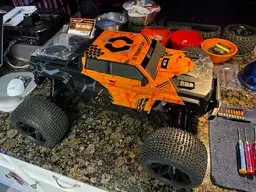
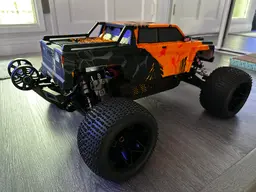
New Savage Flux XL v2 - it's wrenchin' time!

This site may earn a commission from merchant affiliate
links, including eBay, Amazon, and others.
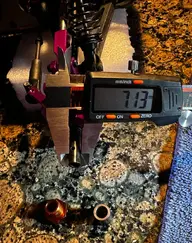
Question.. where can I find a shim for these axle stubs? I got 7mm ones and they’re too small…

IMG_7803.webp

are those stubs supposed to be 8mm??

edit: nvm is 8mm.. damn thing was way out of calibration..
 
Last edited:
Question.. where can I find a shim for these axle stubs? I got 7mm ones and they’re too small…

View attachment 12372

are those stubs supposed to be 8mm??

edit: nvm is 8mm.. damn thing was way out of calibration..
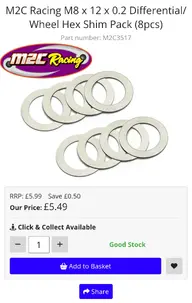
I think typical diff size size shims are 13 x 16 x 0.2 - so you need 8 x 16 x 0.2

Something like this should do the trick:

1000034082.webp

👍
 
Thanks that's the brand I got I think... with some different thicknesses.

So I guess you can run a standard rear hub in the rear without the knuckle part.. gah! I should have looked into that earlier...
 
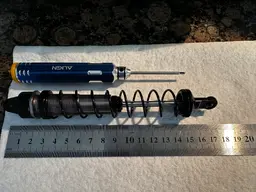
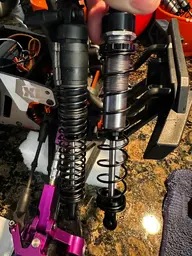
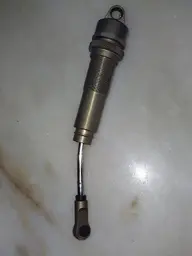
I don't want to be a reporter of bad news, but my experience with those shocks isn't great. I got the same thing from AliExpress, the shafts are made out of soft steel, not hardened steel like the ones on the HPI shocks, they bend very easily. They look good, but other than that, the original shocks perform a lot better and have a smoother action.
1000010377.webp
 
I don't want to be a reporter of bad news, but my experience with those shocks isn't great. I got the same thing from AliExpress, the shafts are made out of soft steel, not hardened steel like the ones on the HPI shocks, they bend very easily. They look good, but other than that, the original shocks perform a lot better and have a smoother action.
View attachment 12376
Noted... are those caps plastic?? mine are alum for sure... so do you suggest sticking with the originals? What's the upgrade path?

PS: this is not the same product.. but it could have parts of the same product. When did you buy yours??

OBV the shaft is one of the most important parts and these could be assembled with some of the same parts.. Plus how do you know that your original shock would have not bent under the same circumstances? it could have been a weird landing.
 
Last edited:
Noted... are those caps plastic?? mine are alum for sure... so do you suggest sticking with the originals? What's the upgrade path?

PS: this is not the same product.. but it could have parts of the same product. When did you buy yours??

OBV the shaft is one of the most important parts and these could be assembled with some of the same parts.. Plus how do you know that your original shock would have not bent under the same circumstances? it could have been a weird landing.

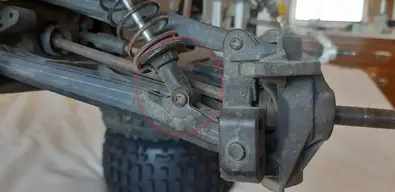
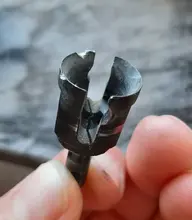
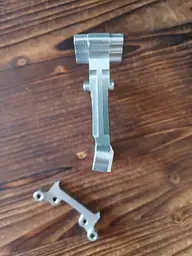
Mine are also fully aluminum. It's definitely not the same product, but probably shares the same parts. I have bent the original and this ones, and when it comes to straightening the shafts, the original ones will be very hard to bend even with pliers, those aluminum ones I can do it by hand... for me that's enough proof that the original shocks will be stronger in that regard. Those aluminum ones have nice features: a stronger body, adjustable spring compression, aluminum caps and rod ends... but the Hpi ones will perform better in my experience. For me, the weakest point about the original ones is the rod end bending quite easily... but I overcame that problem by doing my own rod ends:
20230411_132002.webp

But hey, that's my experience and opinion, they might work for you...
On AliExpress and Ebay there are some parts that can be useful, but most of it is garbage... Original stuff is pricey, but when it comes to parts that need to endure stress and big impacts, in most cases original is better.
Those are some pictures of stuff I got from Ali I don't recomend:

20220616_111302.webp 20230106_190228.webp
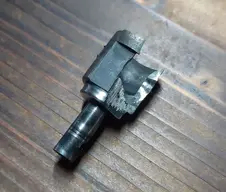
Broken and bent shock tower
20231029_125358.webp
 
Thanks for the heads up... while inspecting everything it does seem like the rod ends will take a lot of energy while bashing... much of the force will end up there it seems... imma give this a go and see what happens... beef up or go smarter with anything that breaks..

I did contact the MFG of those shocks and they said up and down they're quality metals... but of course they will say that.. at least I have a conversation started about it if they bend lol!

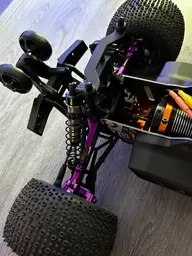
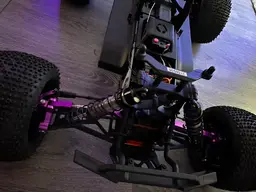
IMG_7813.webpIMG_7815.webpIMG_7816.webpIMG_7817.webpIMG_7818.webp

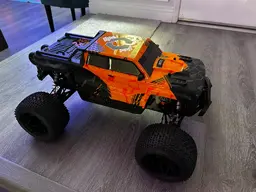
still waiting on the GPM spring steel turnbuckles.. but it's pretty much done except for beefing up the diffs... I ended up with 40wt in all four corners... man I forgot how you can obsess over shock oil weights and that delicate balance between too springy and plush.. lol!

The GPM rear upper A-arms are def nicer than the generic Chinese alum ones I have in the front... but I did have to sand the ends on the GPM ones to make the fit into the c-hub mate better... wow it was tight the first time... that's what he said! heh heh

I want to drive it a bit at this point and see what breaks before making any more parts purchases... I have alum shock towers but waiting to swap those... it's nice to have some flex there - hopefully they don't break but I have a backup plan if they do.

edit: was also thinking about using the stock shocks as an inside second pair with little to no preload and light oil... hmmm... but I feel like it's plush enough without them... but was thinking to balance some of the force off the shocks I got...

Also time to reinforce the body now.. I have the goo and the mesh tape and some pads to cover the shock top area...
 
Last edited:
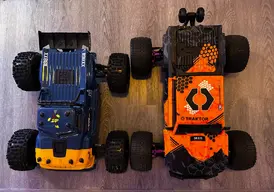
Some pics next to my Notorious v6 … out of the box best truck ever imo.


IMG_7820.webpIMG_7824.webpIMG_7827.webp

it sits a little taller and is longer for sure... tires are not as tall but wider.. once I work on the diffs going to get the belted badlands... a lot closer to the backflips..
 
Has anyone used CVDs from draco?

https://www.draco-jp.com/dracocvds

??

Also @Mvtepixels - I saw and commented on one of your YT videos showing your upper braces. Are those just threaded alum bits, cut to length and then the end of your shock screws threads into those? Just curious... regardless it's a great idea.
 
Those are made out of 8x8mm square aluminum pipe, cut to the correct length. To secure them, I use M3 threaded rods that go inside the aluminum pipe from tower to tower with a nut on both ends. The shock towers have two more free holes, I use one of those for that.
It's a nice solution to prevent the shock towers from bending, and also gives a little bit of support to the body.
But I only did that to my second Savage, the one I use for big jumps 👍
 
Yeah the plastic towers really want to bend inward by default too… I wanted to keep the plastic ones for a bit to see how they do… might keep the shocks from bending.. could absorb just enough impact energy… Regardless thanks for that info. Cool idea and great implementation!

I think could do the same with some threaded (edit) pipe… the round version... but that center handle thing on the v2 might have to go bye bye… maybe might be able to sneak them though the openings
 
Last edited:
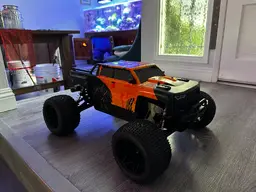
Yelp.. I finally got the suspension and steering stuff all done. Got the toe and camber pretty well dialed in... servo saver spring torqued up pretty good... took it for spin on the street, some hard turning on and off the side walk at speed etc... it drives great, very nimble, responsive...

...but got some wicked torque steer to the right under wide open acceleration.. So it's going to be time to rebuild the diffs with 100-500-100 fluids soon!
 
I debadged the body and working on putting some carbon fiber decals on the window areas... just something different..

parts list so far ...
alum c-bubs all around
alum knuckles all around
alum adjustable upper A-arms all around
alum threaded big bore shocks 170mm (w/5mm shaft) one set for now
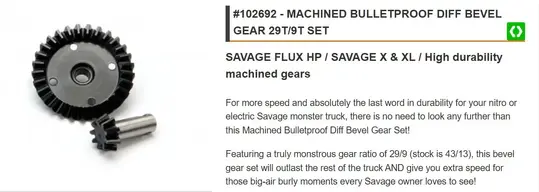
Pinion and ring gear: 102692 (29/9) bullet proof machined front and rear
45kg water proof HobbyPark servo @ 6v 0.11sec/60deg 524oz
alum steering bell crank assembly
extra outdrive cups
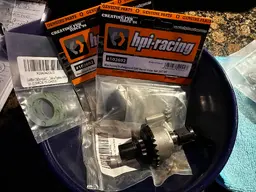
extra diff
extra upper A-arm screws
extra plastic A-arms and hinge pins full set
wheelie bar for the V2 (HPI160398)
3.8 monster truck tires premounted..
5300mah 3s gens ace batteries

also diff oils, some tools... diff locker to have blue and red...

I want to get an extra set of the 17mm hubs etc... just have some spares... keeping the stock esc and motor for now... need to think about beefing up the center diff too..
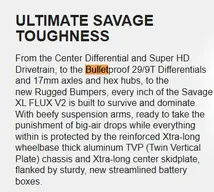
Sorry if I am mistaken but the flux v2 already has bulletproof diffs.1750241414520.webp
 
Sorry if I am mistaken but the flux v2 already has bulletproof diffs.View attachment 12411
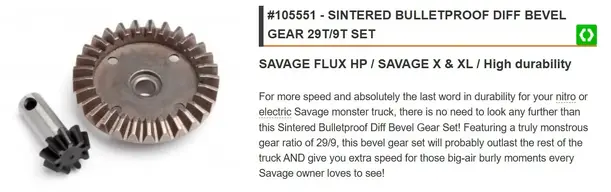
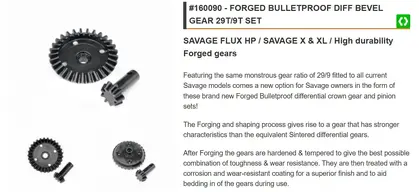
As I said before: Calling all diff's "BULLETPROOF " is just a form of marketing. HPI sells three types of diffs: Sintered, Forged and Machined, Sintered being the worst ones, Machined being the best ones. Although the sintered ones come with the machined input gear... The XL V2 comes with the forged diffs.2.webp
3.webp
1.webp
 
As I said before: Calling all diff's "BULLETPROOF " is just a form of marketing. HPI sells three types of diffs: Sintered, Forged and Machined, Sintered being the worst ones, Machined being the best ones. Although the sintered ones come with the machined input gear... The XL V2 comes with the forged diffs.View attachment 12412
View attachment 12413
View attachment 12414
You sure?
I asked chatgpt and got this:

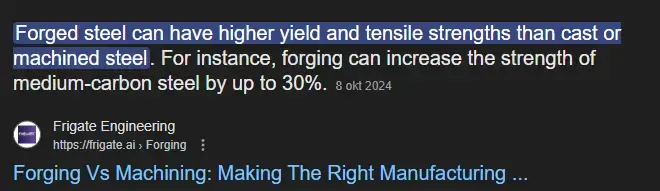
Forged steel is generally stronger than machined steel when we're comparing structural strength and toughness.
Here’s why:

1. Forged Steel:


  • Process: Forging involves deforming the steel under high pressure, often while hot.

  • Grain Structure: This process aligns and compresses the metal's grain structure, which enhances its strength, fatigue resistance, and impact toughness.

  • Strength: Forged parts are typically stronger and more resistant to shear and tensile forces than machined parts made from the same base material.

  • Applications: Used in high-stress applications like crankshafts, aircraft parts, and heavy machinery.

2. Machined Steel:


  • Process: Machining involves cutting away material from a steel billet or forged blank.

  • Grain Structure: The original grain structure is retained or possibly interrupted by cutting; there's no improvement in strength from the machining process itself.

  • Strength: The strength depends entirely on the base material. Machining is for precision, not enhancement of strength.

Summary:​

PropertyForged SteelMachined Steel
Grain alignmentYes (improves)No
StrengthHigherLower (generally)
Fatigue resistanceHigherLower
PrecisionLower (as-forged)Higher (CNC, etc.)

Conclusion:​


If maximum strength and durability are your priority (e.g. in load-bearing or impact-prone parts), forged steel is stronger. If you need high precision or intricate shapes, machined steel might be the better option—often machining is done after forging to combine both benefits.

from my own research forged is indeed stronger.

1750258575253.webp
 
You sure?
I asked chatgpt and got this:

Forged steel is generally stronger than machined steel when we're comparing structural strength and toughness.
Here’s why:

1. Forged Steel:


  • Process: Forging involves deforming the steel under high pressure, often while hot.

  • Grain Structure: This process aligns and compresses the metal's grain structure, which enhances its strength, fatigue resistance, and impact toughness.

  • Strength: Forged parts are typically stronger and more resistant to shear and tensile forces than machined parts made from the same base material.

  • Applications: Used in high-stress applications like crankshafts, aircraft parts, and heavy machinery.

2. Machined Steel:


  • Process: Machining involves cutting away material from a steel billet or forged blank.

  • Grain Structure: The original grain structure is retained or possibly interrupted by cutting; there's no improvement in strength from the machining process itself.

  • Strength: The strength depends entirely on the base material. Machining is for precision, not enhancement of strength.

Summary:​

PropertyForged SteelMachined Steel
Grain alignmentYes (improves)No
StrengthHigherLower (generally)
Fatigue resistanceHigherLower
PrecisionLower (as-forged)Higher (CNC, etc.)

Conclusion:​


If maximum strength and durability are your priority (e.g. in load-bearing or impact-prone parts), forged steel is stronger. If you need high precision or intricate shapes, machined steel might be the better option—often machining is done after forging to combine both benefits.

from my own research forged is indeed stronger.

View attachment 12415

It also would indeed make total sense to have their top product (hpi savage flux xl v2 which is 6s ready) to have their highest quality materials.
 
LOL.. yeah I went down that rabbit hole too. The machined diffs that are called 'bulletproof' also are stronger than the stock forged ones and are for sure an option for the X and XL... and at $40 a pop for each end they had better be stronger! Which reminds me I need to get working on that drive train!

I got a new typhon 6s and have been nerding out on that thing.. never had a modern buggy.. thing is a rocket!! I am working on steering blocks and carriers for the notorious and typhon as well as finally installing the new servo into the notorious!
 
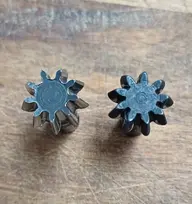
What ChatGPT says might be correct, although it doesn't seem to apply in this case. I don't know the manufacturing process behind those forged gears from HPI, but in my experience the forged diffs are far behind in terms of durability when compared to the machined ones.
This is a picture showing two forged input gears, on the left, one with two months of use, on the right a new one, it's easy to see how much wear the teeth have on the used one.
20250619_000901.webp
Wish I'd taken photos of one forged input gear I took out of the front diff some years ago; the teeth were all gone...
Just to be clear, this happened while using the original 2200kv motor. Now I'm using the machined diffs with a much stronger 1650 kV motor, and after two years the gears look like new...
Also, the machined gears are way more expensive than the forged ones, so it doesn't make sense to pay more for less durability.
 
At the scale we run at, sintered or forged gears can't be better than machined gears, which are far more precise and efficient. The more precise the gears mesh, the less likely they are to fail.

For larger parts in automotive and aerospace, forging is used where maximum strength is required, aligning the grain flow of the metal. There is also minimal waste, faster production and lower unit cost (for mass production).

CNC parts take longer to make and have accordingly higher unit cost, along with more material waste. But they have a better surface finish. This matters with small gears. 👍

Edit to add: CNC machined/finished forged gears would probably be the best - if anyone makes them.
 

Latest posts

Members online

Back
Top