
MotoPsycho
Well-Known Member
- Messages
- 500
- Location
- WY, Ooosa (USA)
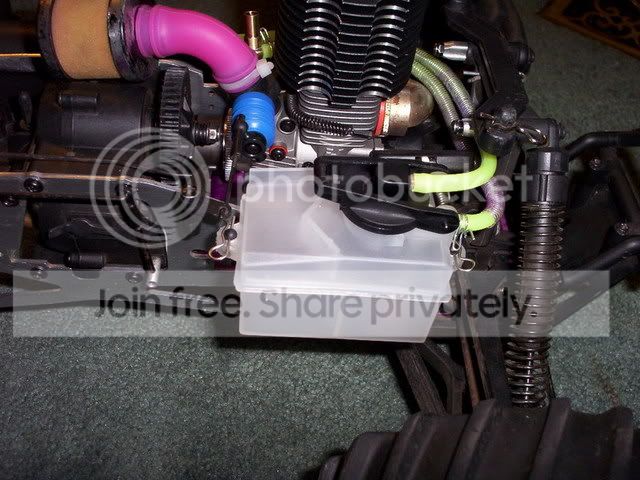
The tank half lean sydrome is a very simple hydraulics problem. In a hydraulic cylinder formula, the force on a hydraulic piston is equal to the pressure in the hydraulic cylinder, times the hydraulic piston area.
So, in your truck, the outflow pressure to the carburetor, equals the pressure on the fluid (force on the hydraulic piston) times the fluid surface area (hydraulic piston area).
Here is a more clear example:
Let’s assume there is 1 PSI of force being applied inside the fuel tank by the exhaust. (force on the hydraulic piston)
If the fluid surface area (hydraulic piston area) of the larger top portion of the tank is 2 square inches , the pressure exerted to force fuel to the carburetor is 2 PSI. (2 square inches x 1 PSI = 2 PSI)
If the fluid surface area (hydraulic piston area) of the smaller bottom portion of the tank is 1 square inch, the pressure exerted to force fuel to the carburetor is 1 PSI. (1 square inch x 1 PSI = 1 PSI)
Therefore the exhaust pressure is capable of exerting more force on the upper portion of the tank than the lower.
This means more fuel is forced to the carburetor through the upper half (2 PSI) of the tank than the lower half (1 PSI), causing the half tank lean syndrome. The truth of the matter is that the tank offers exactly two settings – fuel, and less fuel – and it changes at mid tank.
While many of the fixes forum members have offered to remedy this problem may “helpâ€, the only truly effective fix is a fuel tank that offers a consistent fluid surface area through the entire tank. In other words, a tank that is the same size square (or rectangular) from top to bottom. (such as the Ofna tank) is the only true FIX.
As a side note, many have mentioned gravity as a factor, it’s really not-
Water exerts .403 pounds per foot of fluid.
So, in a fuel tank that is roughly 2 inches tall, there is only a 0.03 PSI discharge pressure difference between a full tank, and an empty tank – if it was full of water. Hopefully your tank has nitro, which has an even lower specific gravity than water, meaning it exerts less gravity pressure than water. While gravity may be a small factor in fuel flow, I would argue as to it's importance in delivering fuel to the carburetor.
As for the “siphon effectâ€, the same rules apply. There is less than 4 vertical inches to mount tanks or fuel line on your truck, and in a siphon, pressure and suction cancel one another out based on equal vertical elevation.
You only need to consider the vertical difference between tank outlet and carb inlet then factor a 0.015 PSI / inch difference (weight of water per inch - remember, your fuel is even lighter) – that is all that matters, and really, it is irrelevant.
We could also go into "line loss" due to friction caused by diameter, line and curves - but why?
So, if you don’t like the ½ lean problem you have, buy a new fuel tank! :Mr.confused:
Here is a thread for one solution: Clicky
:rock: Moto :rock:
So, in your truck, the outflow pressure to the carburetor, equals the pressure on the fluid (force on the hydraulic piston) times the fluid surface area (hydraulic piston area).
Here is a more clear example:
Let’s assume there is 1 PSI of force being applied inside the fuel tank by the exhaust. (force on the hydraulic piston)
If the fluid surface area (hydraulic piston area) of the larger top portion of the tank is 2 square inches , the pressure exerted to force fuel to the carburetor is 2 PSI. (2 square inches x 1 PSI = 2 PSI)
If the fluid surface area (hydraulic piston area) of the smaller bottom portion of the tank is 1 square inch, the pressure exerted to force fuel to the carburetor is 1 PSI. (1 square inch x 1 PSI = 1 PSI)
Therefore the exhaust pressure is capable of exerting more force on the upper portion of the tank than the lower.
This means more fuel is forced to the carburetor through the upper half (2 PSI) of the tank than the lower half (1 PSI), causing the half tank lean syndrome. The truth of the matter is that the tank offers exactly two settings – fuel, and less fuel – and it changes at mid tank.
While many of the fixes forum members have offered to remedy this problem may “helpâ€, the only truly effective fix is a fuel tank that offers a consistent fluid surface area through the entire tank. In other words, a tank that is the same size square (or rectangular) from top to bottom. (such as the Ofna tank) is the only true FIX.
As a side note, many have mentioned gravity as a factor, it’s really not-
Water exerts .403 pounds per foot of fluid.
So, in a fuel tank that is roughly 2 inches tall, there is only a 0.03 PSI discharge pressure difference between a full tank, and an empty tank – if it was full of water. Hopefully your tank has nitro, which has an even lower specific gravity than water, meaning it exerts less gravity pressure than water. While gravity may be a small factor in fuel flow, I would argue as to it's importance in delivering fuel to the carburetor.
As for the “siphon effectâ€, the same rules apply. There is less than 4 vertical inches to mount tanks or fuel line on your truck, and in a siphon, pressure and suction cancel one another out based on equal vertical elevation.
You only need to consider the vertical difference between tank outlet and carb inlet then factor a 0.015 PSI / inch difference (weight of water per inch - remember, your fuel is even lighter) – that is all that matters, and really, it is irrelevant.
We could also go into "line loss" due to friction caused by diameter, line and curves - but why?
So, if you don’t like the ½ lean problem you have, buy a new fuel tank! :Mr.confused:
Here is a thread for one solution: Clicky
:rock: Moto :rock:
Last edited by a moderator: