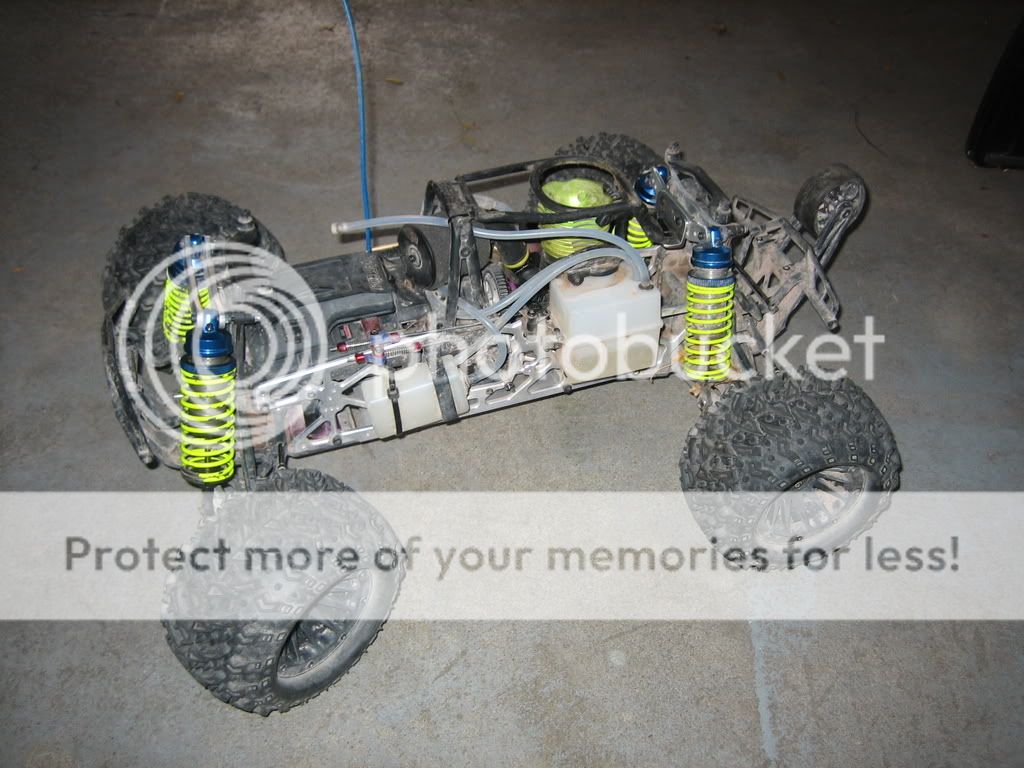
I thought a lot of times a fuel filter would serve as a small 'reserve' tank in the event that your truck gets flipped on its lid? I have only flipped mine onto it's deck two or three times, and it's never cut out on me, but I'd say it never spent more than 10 seconds or so on its back.
This is giving me nightmares back to my days of TAM 335: Fluid Dynamics.
Anyways, I believe the formula for pressure drop in a tube is:
Δp = λ * (L/D) * (ρ/2) * ω^2
Where: Δp - pressure drop along pipe length
λ - pipe friction coefficient
L - length of pipe
D - diameter of pipe
ρ - fluid density
ω - fluid velocity
Of course, this is modeling a curved tube as an ideal straight pipe, so it's not entirely accurate, but it seems as though doubling the length would double the pressure drop between the tank and the carburetor. Of course, this does not mean that double length would equal half pressure, as this is specifically the pressure drop along the pipe length.
It seems to me that we're using small enough numbers here that the pressure drop is probably very small and hence doubling it would not have a dramatic effect, but I don't have real numbers here (nor do I have the time to figure them), so it's pretty theoretical on my part.
And of course, please feel free to correct me if I am wrong here, as I never excelled in this class and it's been a while since I've used anything from it.:istupid: