Idle temperature too low

This site may earn a commission from merchant affiliate
links, including eBay, Amazon, and others.

Matvey

Member
Messages
12
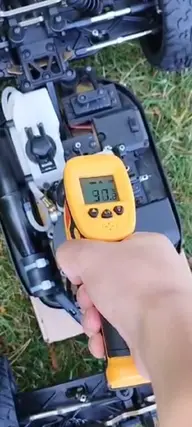
So, basically i just got a nitro for my birthday (hpi vorza truggy) and I'm still breaking it in but I've noticed that the idle temperature is very low (like 40-45° and it is absolutely new and stock). How to fix that? And is my engine cooked because I've ran 3 idle tanks through it with this temperature? :_(Screenshot_2025-08-16-09-29-57-828_com.miui.gallery.webp
 
Also wrap sum tinfoil round cooling head so it holds heat better well you break it in ?
 
You keeping temps at 200f wi a heatgun as it’s idling ?
I don't really understand what you mean 😅. No, i have not broken it in yet because i don't have the hump pack so i have no remote control over the car, so when it was idling i was just playing with the acceleration servo to control the throttle.
 
Ye that’s ok but do you have a heatgun ? N also u can put foil or a sock over cooling head to keep the heat in ? You gotta keep temps up on idle tanks ?
 
Ye that’s ok but do you have a heatgun ? N also u can put foil or a sock over cooling head to keep the heat in ? You gotta keep temps up on idle tanks ?
Alright, thanks and no i do not have a heatgun. But why do you think it's so low?
 
Because yor supposed to not let any heat escape on first 4-6 tanks so people use nitro engine head heater heatguns or put foil n cut up socks over cooling head i after heat my savage up before it will even start jump on YouTube n check break in vids yor temps r Lowe coz it’s only idling
 
Alright, thanks and no i do not have a heatgun. But why do you think it's so low?
Your engine's temperature will be low when idling and with no load. Presumably, with a rich setting which again will result in lower temperatures.

The purpose of break in is to allow the piston (which is ring-less) and the chromed liner to 'bed-in' to each other - but at normal operating temperatures. The piston and sleeve are tapered towards the top. At top dead centre (TDC), the piston and sleeve should be at their tightest.

One concept is that modern CNC machining is so precise, that it largely eliminates any need for running-in process with ABC engines. However, the counter argument is that the purpose of heat-cycling your engine is NOT to wear parts in as such, but to "relieve the internal stresses of the metal parts that occur during the manufacturing
process."


This is quite an abstract concept to grasp, so we'll stick with the terms 'bedding-in' or 'conditioning the piston and sleeve for prolonged use' as the purpose of running in an engine.

When cold, competition glow engines can be so tight that they actually stick at TDC.

What can happen if you allow the piston and sleeve to wear in at lower temperatures, is that when the engine reaches the higher, optimal temperatures attained with 'the perfect tune', as the sleeve expands, the interface between them can become sub-optimal and blow-by may result.

"The sleeve will start expanding to the proper design parameters at approximately 205 degrees F., however, this does not mean that this is the normal operating temperature; it only means that you need to always get your engine up to at least this temperature as quickly as possible after the engine is started. Surprisingly, many companies today still recommend the old fashioned way of breaking in an engine [running in at idle with low load and a rich setting] as described earlier in this manual, but we have found that our method not only makes more common sense, but helps your engine run much better and with more longevity. The old-fashioned method of break-in; running the engine at low temperatures and very rich for several tanks, destroys the piston prematurely. By breaking in your engine the old-fashioned way, the piston actually “wears in” to the cool and under expanded sleeve size."

The best detailed instruction manual I have ever seen for any glow engine can be found here:

Fantom ABC engine manual - Nitro Engine Bible!!

Follow this guide and you can't go far wrong. This is the way to do it.

Furthermore, this details carb tuning, why temperature tuning is NOT the way to do it - rather, temperatures are a guide.

This is how I treated my engines since my RB WS7 engine, prepared by Stan Crompton. The tightest engine I've ever had. It was also the most rapid .21 size engine, ever.

It's how I ran this engine in:

PXL_20250430_194218500.MP.webp
It's a ripper! 🤩
 
Your engine's temperature will be low when idling and with no load. Presumably, with a rich setting which again will result in lower temperatures.

The purpose of break in is to allow the piston (which is ring-less) and the chromed liner to 'bed-in' to each other - but at normal operating temperatures. The piston and sleeve are tapered towards the top. At top dead centre (TDC), the piston and sleeve should be at their tightest.

One concept is that modern CNC machining is so precise, that it largely eliminates any need for running-in process with ABC engines. However, the counter argument is that the purpose of heat-cycling your engine is NOT to wear parts in as such, but to "relieve the internal stresses of the metal parts that occur during the manufacturing
process."


This is quite an abstract concept to grasp, so we'll stick with the terms 'bedding-in' or 'conditioning the piston and sleeve for prolonged use' as the purpose of running in an engine.

When cold, competition glow engines can be so tight that they actually stick at TDC.

What can happen if you allow the piston and sleeve to wear in at lower temperatures, is that when the engine reaches the higher, optimal temperatures attained with 'the perfect tune', as the sleeve expands, the interface between them can become sub-optimal and blow-by may result.

"The sleeve will start expanding to the proper design parameters at approximately 205 degrees F., however, this does not mean that this is the normal operating temperature; it only means that you need to always get your engine up to at least this temperature as quickly as possible after the engine is started. Surprisingly, many companies today still recommend the old fashioned way of breaking in an engine [running in at idle with low load and a rich setting] as described earlier in this manual, but we have found that our method not only makes more common sense, but helps your engine run much better and with more longevity. The old-fashioned method of break-in; running the engine at low temperatures and very rich for several tanks, destroys the piston prematurely. By breaking in your engine the old-fashioned way, the piston actually “wears in” to the cool and under expanded sleeve size."

The best detailed instruction manual I have ever seen for any glow engine can be found here:

Fantom ABC engine manual - Nitro Engine Bible!!

Follow this guide and you can't go far wrong. This is the way to do it.

Furthermore, this details carb tuning, why temperature tuning is NOT the way to do it - rather, temperatures are a guide.

This is how I treated my engines since my RB WS7 engine, prepared by Stan Crompton. The tightest engine I've ever had. It was also the most rapid .21 size engine, ever.

It's how I ran this engine in:

View attachment 12476
It's a ripper! 🤩

Thank you so much 🙏, so is it okay?
 
Thank you so much 🙏, so is it okay?
Your engine is OK - for now. But it won't be if you continue leaving it sit idling well below temperature.

Don't run the engine in the way you are currently doing so!

The engine is not exhibiting unusual behaviour by being not being hot at idle with no load.

Essential take homes:
  • Pick a decent fuel
  • Stick to a nitro content - say 25%
  • Use a suitable glow plug for your choice of nitro content
  • If you aren't confident with carb tuning, pick a fuel with a slightly higher oil content
  • Run the engine in by operating the engine in the car
  • Get the engine up to temperature quickly
  • Keep the runs short for the first 1/4 gallon and allow the engine to cool in between
  • Rinse repeat
There's no harm in helping the engine warm up with a hair dryer or heat gun, but honestly, get the truck's radio gear sorted and run the truck. You'll hear and feel the engine becoming more useable, given an appropriate carb setting.

Ultimately, you're looking for a crisp throttle response, with the engine quickly reaching peak revs and conversely, just as quick to return to idle when the throttle is chopped.

Exhaust trail should be a misty trail at full throttle.

When you achieved this perfect tune, make a note of the temperature that the engine is happy running at. You now know as a reference where your engine likes to be temperature-wise on a given ambient temperature, altitude, pressure, humidity etc. Given a different set of conditions, it may be better on a different tune that results in different temps. Which is why we don't tune to temperature.

Engine note should sound 'on the pipe' - crisp sounding, not wooly.

These should be your queues for any slight main needle adjustments.

With the main needle set correctly first, then you can adjust the idle mixture screw (not to be confused with the tick over set screw). You need your engine to respond crisply when you blip the throttle. Lots of smoke and slow to build revs indicates too rich a idle (low speed) needle. Building up revs and then cutting suddenly is an indication of the low speed needle being too lean. It can sometimes be an indicator of air in the fuel lines - you have to figure out which it is.

It's a steep learning curve, but fundamentally engines require just 3 things (in the right quantity)

Fuel
Oxygen
Ignition

Keep all of these 3 things right, and you can fault find pretty easily. ☝️👍
 
Your engine is OK - for now. But it won't be if you continue leaving it sit idling well below temperature.

Don't run the engine in the way you are currently doing so!

The engine is not exhibiting unusual behaviour by being not being hot at idle with no load.

Essential take homes:
  • Pick a decent fuel
  • Stick to a nitro content - say 25%
  • Use a suitable glow plug for your choice of nitro content
  • If you aren't confident with carb tuning, pick a fuel with a slightly higher oil content
  • Run the engine in by operating the engine in the car
  • Get the engine up to temperature quickly
  • Keep the runs short for the first 1/4 gallon and allow the engine to cool in between
  • Rinse repeat
There's no harm in helping the engine warm up with a hair dryer or heat gun, but honestly, get the truck's radio gear sorted and run the truck. You'll hear and feel the engine becoming more useable, given an appropriate carb setting.

Ultimately, you're looking for a crisp throttle response, with the engine quickly reaching peak revs and conversely, just as quick to return to idle when the throttle is chopped.

Exhaust trail should be a misty trail at full throttle.

When you achieved this perfect tune, make a note of the temperature that the engine is happy running at. You now know as a reference where your engine likes to be temperature-wise on a given ambient temperature, altitude, pressure, humidity etc. Given a different set of conditions, it may be better on a different tune that results in different temps. Which is why we don't tune to temperature.

Engine note should sound 'on the pipe' - crisp sounding, not wooly.

These should be your queues for any slight main needle adjustments.

With the main needle set correctly first, then you can adjust the idle mixture screw (not to be confused with the tick over set screw). You need your engine to respond crisply when you blip the throttle. Lots of smoke and slow to build revs indicates too rich a idle (low speed) needle. Building up revs and then cutting suddenly is an indication of the low speed needle being too lean. It can sometimes be an indicator of air in the fuel lines - you have to figure out which it is.

It's a steep learning curve, but fundamentally engines require just 3 things (in the right quantity)

Fuel
Oxygen
Ignition

Keep all of these 3 things right, and you can fault find pretty easily. ☝️👍
Maybe i should complete the break in first and then play with the screws?
 
Is it the f4.6 engine ? N if it’s bin idleing ok wi plenty smoke n oil cumin out exhaust needles shud b flush ? Dya find way to keep it hot ? Some good vids on YouTube
 
Maybe i should complete the break in first and then play with the screws?
Your break in needs to be done with your car actually running on the ground, so your engine is under load. Get your radio gear in, then sort out running in. 👍

Don't leave it sitting idling - our nitro engines are basically not designed to idle for ages.

Click the link - it explicitly explains what to do. 👍
 

Latest posts

Members online

Back
Top